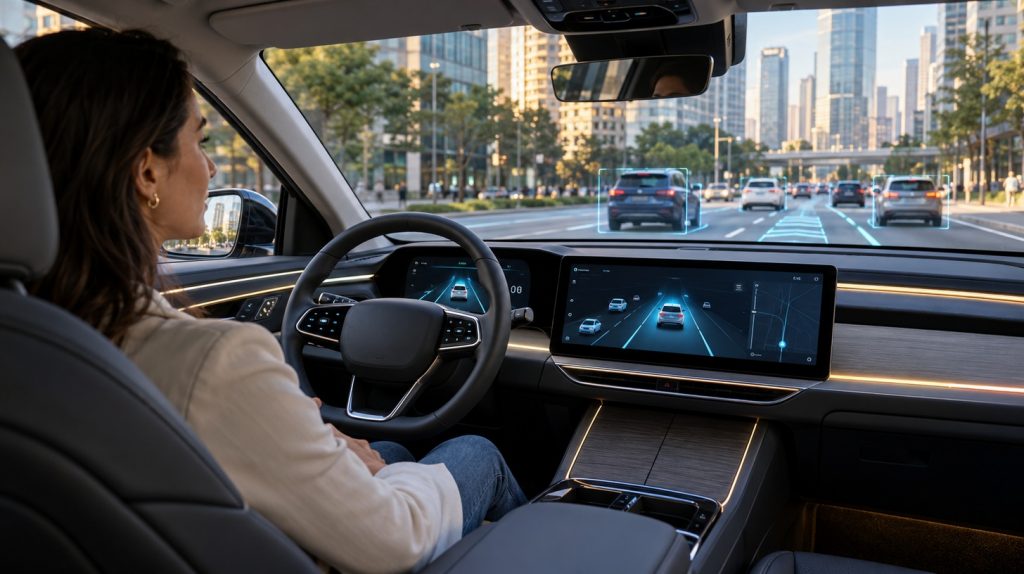
Your car spots a cyclist, brakes for traffic, and warns you about a blind spot. That extra help is especially welcome when you’re settling into a new country and already have plenty on your plate: unfamiliar driving rules, insurance decisions, maybe even a tab open to yugatech.com while you figure out the car-buying process. But how much of the driving can the car actually handle, and when do you still need to take control?
What are smart cars?
Smart cars use software and sensors to help people drive, park, and maintain vehicles. Features include emergency braking, live navigation, remote diagnostics, and online updates.
Connected doesn’t mean autonomous. Most still need an attentive driver.
Key technologies behind smart cars
Smart cars rely on a handful of core technologies that work together to sense the road, make decisions, and keep you connected. Here are the main ones.
Autonomous driving
SAE defines six automation levels. At Level 0, you drive. Level 1 assists with steering or speed; Level 2 helps with both. You remain responsible.
Level 3 drives under limited conditions but may request a takeover. Level 4 can operate without a driver within a defined service area. Level 5 means driving anywhere a human could. Level 5 remains unavailable.
Sensors and cameras
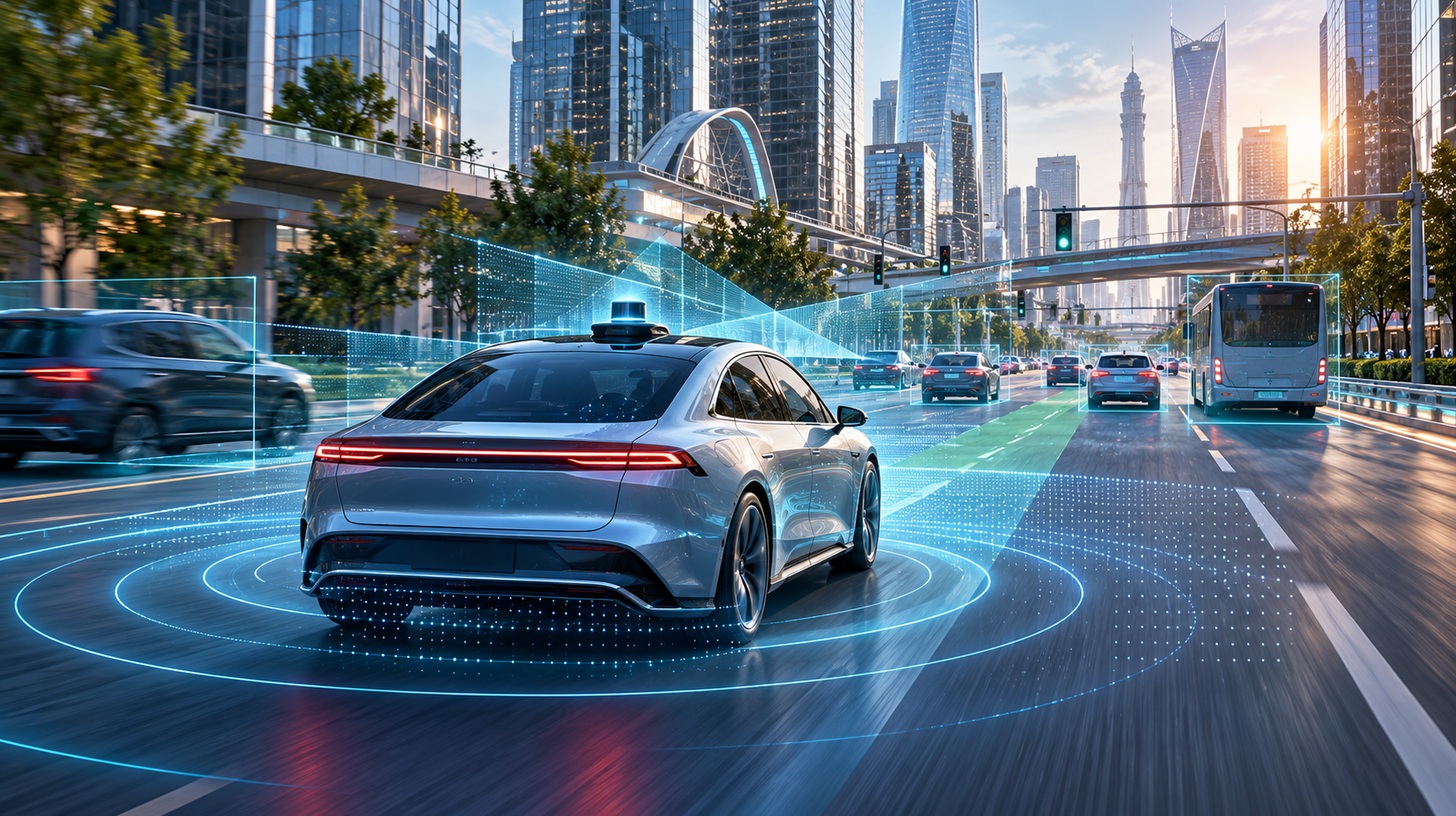
Cameras read lane markings, signs, and traffic lights. Radar tracks the position and speed of other cars. Lidar uses laser pulses to map surroundings, while other sensors help with parking.
Cars combine these signals, but fog, glare, heavy rain, and unusual road layouts can still cause trouble.
AI and machine learning
AI helps a vehicle interpret what its sensors detect and decide how to react. Engineers train and test it on driving data. A plastic bag blowing across the road shouldn’t trigger the same response as a child stepping off the curb.
Still, clever software needs rigorous testing and safeguards.
V2X and connected navigation
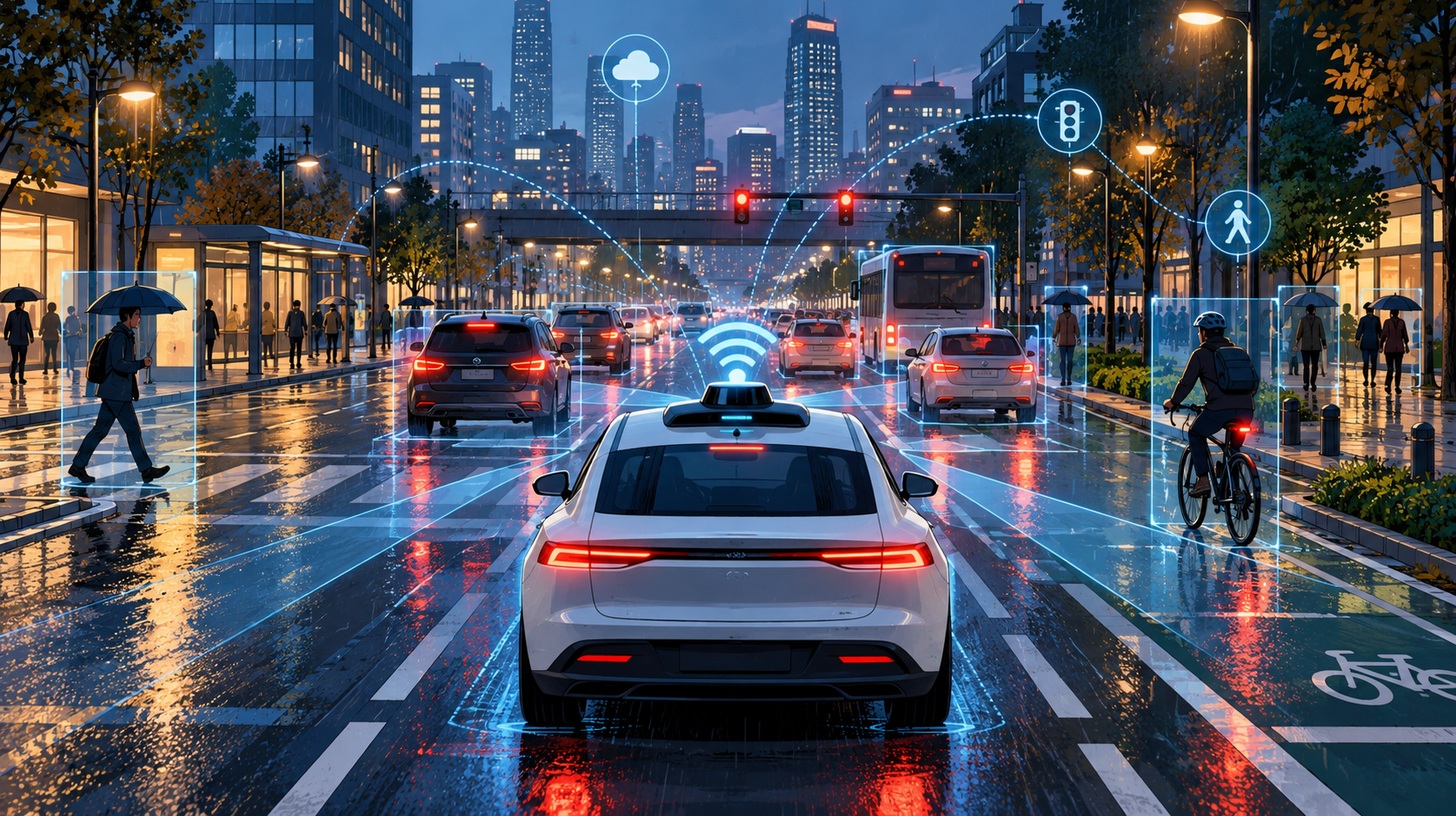
Vehicle-to-everything (V2X) communication could let cars receive warnings from nearby vehicles or equipped traffic lights. Live navigation already reroutes around traffic and closures. That depends on compatible infrastructure.
Cloud services and updates
Over-the-air updates can fix bugs and improve features without a dealership visit. Remote diagnostics may flag problems early. That demands ongoing support and security.
Real-world examples
Tesla’s Autopilot and Full Self-Driving (Supervised) offer advanced driving assistance, but they require an attentive driver. Supervised doesn’t mean driverless.
Waymo operates driverless ride-hailing services in selected areas, an example of Level 4 automation with geographic limits. General Motors offers hands-free highway assistance through Super Cruise, which also has operating restrictions.
A highway assistant and a robotaxi solve different problems.
How smart cars affect daily travel
Adaptive cruise control can make long drives less tiring. Automatic braking may help prevent some crashes or reduce their severity, and navigation can steer you around road closures.
But smart features are only part of the picture; whether you’re figuring out how to buy a car in Qatar before a move or comparing models closer to home, insurance, maintenance, and everyday practicality matter just as much as the technology.
Electric smart cars can also use energy efficiently, but their environmental impact depends on electricity generation, manufacturing, and how often they’re driven. And while smarter driving may improve efficiency, it won’t necessarily mean less traffic.
Challenges smart cars still face
Smart cars have come a long way, but several hurdles remain before they can be trusted in every situation. Here are the main challenges to keep in mind.
Safety and reliability
A system that works well on a clear highway may struggle with roadworks, snow, or an unpredictable pedestrian. Drivers can also become overconfident and stop paying attention when they shouldn’t.
Privacy and cybersecurity
Connected vehicles may collect location, driving, and vehicle-health data. Owners need to know what’s stored, who can access it, and how it’s protected. Updates need protection, too.
Laws, cost, and public trust
Rules for driverless cars vary by location. After a crash, responsibility may depend on the vehicle’s capabilities and whether someone was supposed to be in control. Sensors, repairs, and subscriptions add costs.
Trust needs proven safety, not flashy names.
What’s next for smart cars?
Expect better assistance, sensors, and software. Driverless services may expand where conditions allow.
For most people, the best smart car won’t be the one that promises to do everything. It’ll be the one that makes ordinary trips safer while being clear about what it can’t do.